
Winter Heating & Destratification
Bring Trapped Roof-Level Heat Back Towards The Occupied Zone
In heated warehouses, factories, workshops and other high-roof buildings, warm air naturally rises and can collect beneath the roof while cooler air remains around people and working areas below. This vertical temperature difference is known as thermal stratification.
A correctly specified HVLS fan can operate at a suitably low winter speed to gently mix these temperature layers and return existing warm air towards the occupied zone. The aim is to create more even floor-to-ceiling temperatures and make better use of heat that is already being produced by the building’s heating system, machinery, lighting or processes.
Where significant heat is being trapped at roof level, destratification can help reduce unnecessary heating demand and heater run time. The actual opportunity depends on the building height, insulation, air leakage, heating system, controls, operating hours and the existing floor-to-ceiling temperature difference, so energy savings should always be assessed on a project-specific basis.
Turn Layered Heat Into A More Even Building Temperature
The objective is not to create a cold downward draught. A correctly specified HVLS system operates slowly during winter to mix warm and cool air layers and return useful roof-level heat towards the occupied zone.
Useful Heat Is Trapped Above The Occupied Zone
Warm air from the heating system naturally rises and can accumulate beneath the roof while the working area below remains cooler. The heating system may continue operating to raise the occupied-zone temperature even though useful heat already exists overhead.
- Large floor-to-ceiling temperature difference
- Cooler working areas and warmer roof space
- Useful heat remains above the occupied zone
- Greater opportunity for roof-level heat loss
- Heating may need to operate for longer
Warm Air Is Returned Towards Working Height
At a suitably low winter speed, the HVLS fan gently mixes the air layers and brings warm roof-level air back towards the occupied zone, helping create a more even temperature throughout the building.
- More even temperature from floor to ceiling
- More consistent conditions across occupied zones
- Reduced accumulation of heat at roof level
- Better use of heat already inside the building
- Potential to reduce heating demand and heater run time
Independent University of Liverpool Research
MegaFan commissioned the University of Liverpool Engineering Department to model airflow, temperature distribution and heater demand in a large heated warehouse with an HVLS fan switched on and off. The study examined warehouse apex heights from 12.5 m to 20 m and compared the heater power required to maintain the target occupied-zone temperature.
The modelling showed lower heater-power requirements with the fan operating. At an outside temperature of 4°C, the report indicated approximately 32% modelled heater-power saving at 12.5 m, rising to around 40–45% for the 15–20 m cases. These are modelled results from a generic warehouse and should not be treated as guaranteed savings for every building.
Ready to Find the Right Air Flow System for Your Building?
Tell us about your building, airflow requirements and the areas you want to improve. Our team can help recommend the right fan size, quantity, positioning and control solution for your site.
How do we achieve such HUGE energy savings ?
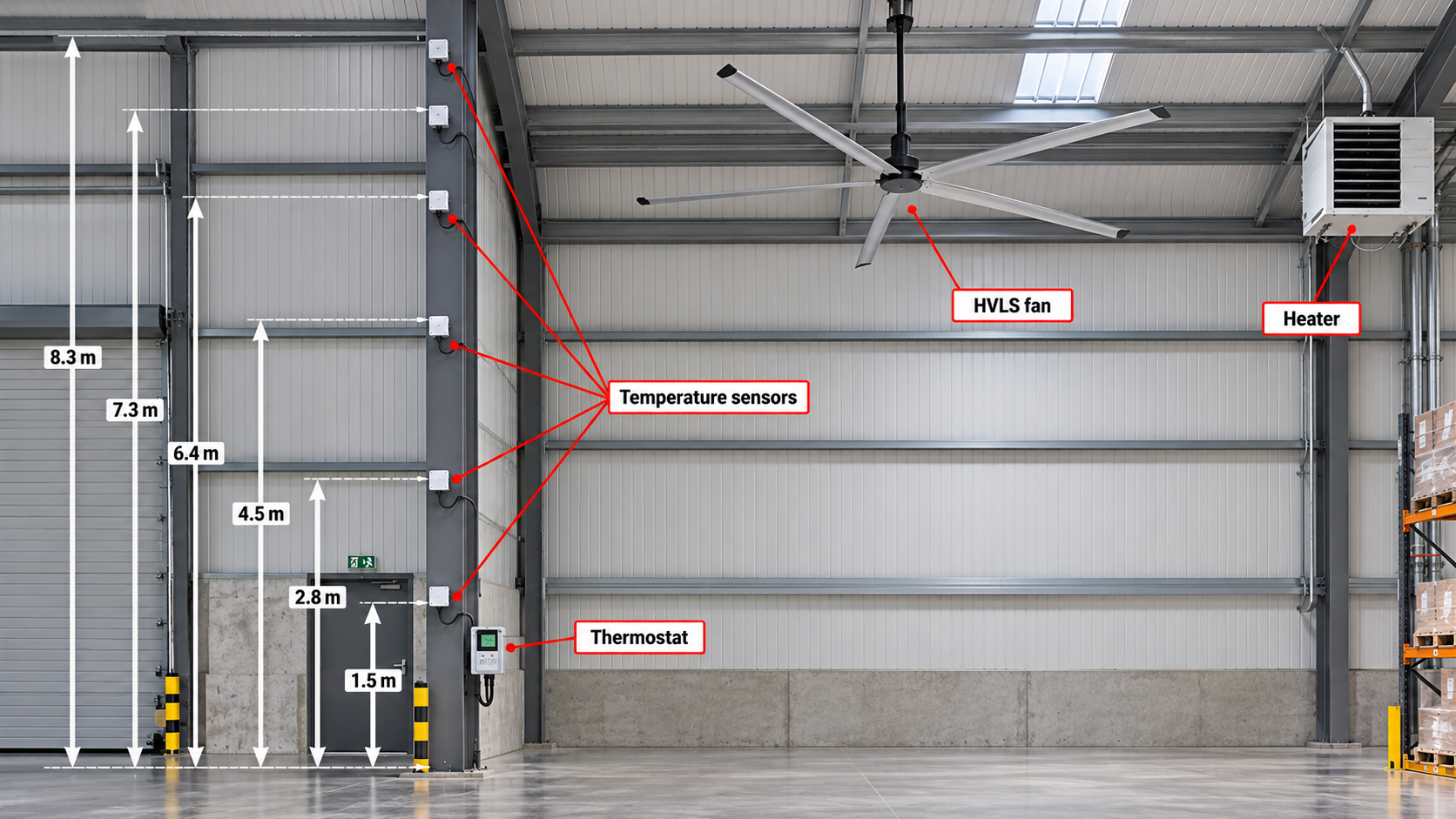
The stratified air layers can clearly be seen in between the two.
With HVLS fans running in week 2, there is no longer any stratification and all sensors are essentially recording the same temperature. As the destratified floor temperature was several degrees higher than the stratified floor temperature, the thermostat setting can be lowered, reducing the heating system run time and saving heating energy.
Commercial Gas Costs Up 228% Since 2006 — Could HVLS Fans Cut Your Heating Energy Use?
This graph shows how average UK commercial gas prices have changed from 2006 to the first half of 2026, highlighting the lasting impact of rising energy costs.
High-volume, low-speed (HVLS) fans can help businesses combat these costs by gently redistributing warm air trapped at ceiling level back to occupied areas.
By reducing wasted heat and easing heating demand, HVLS fans offer the potential to use up to 45% less energy for heating in suitable conditions, depending on the building and operating conditions.
- FAQS
Frequently Asked Questions
Winter heating performance in large buildings is affected by more than the heating system alone. Building height, insulation, air leakage, roof temperature, heater type, operating hours and the difference between floor-level and roof-level temperatures can all affect how much useful heat becomes trapped overhead.
HVLS destratification uses slow, controlled air movement to mix these temperature layers and return warm roof-level air towards the occupied zone. The aim is to make better use of heat already inside the building — not to generate additional heat or create a cooling draught.
These FAQs explain how winter destratification works, what can affect potential heating savings and how a MegaFan system should be designed around the actual building.
What Is Thermal Stratification?
Thermal stratification is the layering of air at different temperatures inside a building. Warm air naturally rises towards the roof while cooler air remains closer to floor level, creating a vertical temperature difference between the roof space and the occupied working zone.
How Do HVLS Fans Support Winter Heating?
At a suitably low winter operating speed, an HVLS fan gently mixes the air and returns warm roof-level air towards the occupied zone. This can help create a more even temperature from floor to ceiling and make better use of heat already being produced by the building.
Do HVLS Fans Create A Cold Draught In Winter?
A correctly specified winter destratification system should operate slowly enough to mix the air without creating the stronger perceived cooling effect used during summer. Fan speed, position, direction and controls should all be selected around the building and occupied areas.
Can Destratification Reduce Heating Costs?
It can help reduce heating demand where a significant amount of useful heat is being trapped at roof level. Actual savings depend on factors including building height, insulation, air leakage, heating equipment, controls, operating hours, energy prices and the existing floor-to-ceiling temperature gradient.
How Much Energy Can A Building Save?
There is no single guaranteed saving that applies to every building. MegaFan’s supplied research includes modelled examples showing approximately 32% to 47% under particular building-height and outdoor-temperature conditions, but these figures should not be presented as guaranteed site savings. A project-specific assessment is required.
Why Does Building Height Affect The Opportunity For Savings?
Taller heated buildings can contain a larger volume of warm air above the occupied zone and can develop a greater vertical temperature difference. This can increase the amount of useful heat sitting near the roof and the potential for roof-level heat loss, creating a greater opportunity for destratification.
Can a HVLS Fan Replace The Heating System?
No. A HVLS fan does not generate heat. It redistributes heat that is already present from the heating system, machinery, lighting, processes or solar gain. The existing heating system is still responsible for producing the heat required by the building.